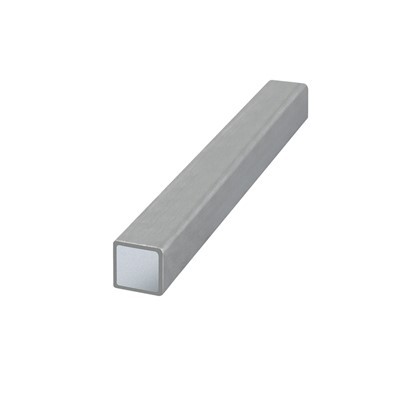
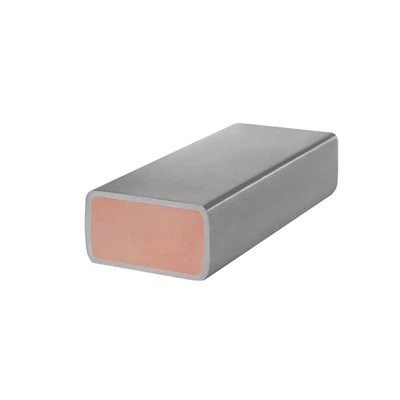
Yo! As a supplier of Titanium Clad Copper Bar, I'm stoked to share with you all about its chemical properties.
First off, let's understand what a Titanium Clad Copper Bar is. It's a composite material where a layer of titanium is bonded to a copper core. This combination brings together the unique properties of both metals, opening up a wide range of applications.
Chemical Resistance
One of the most outstanding chemical properties of Titanium Clad Copper Bar is its excellent chemical resistance. Titanium has a natural ability to form a passive oxide layer on its surface when exposed to oxygen. This thin oxide layer acts as a protective shield, preventing further oxidation and corrosion. It can withstand harsh chemical environments, including exposure to acids, alkalis, and various corrosive salts.


For example, in the chemical industry, where equipment is constantly in contact with corrosive substances, Titanium Clad Copper Bar can be used to make pipes, reaction vessels, and electrodes. The copper core provides good electrical conductivity, while the titanium cladding ensures long - term resistance to corrosion, reducing maintenance costs and extending the service life of the equipment.
In comparison, other clad bars like the Titanium Clad Aluminum Bar and Nickel Clad Copper Bar have different chemical resistance profiles. Aluminum is more reactive than titanium and may corrode more easily in certain acidic or alkaline environments. Nickel, on the other hand, has good resistance to some chemicals but may not be as versatile as titanium in extremely harsh conditions.
Oxidation Resistance
Titanium's oxidation resistance is truly remarkable. Even at high temperatures, the titanium cladding on the copper bar can form a stable oxide layer. This layer not only protects the underlying copper from oxidation but also maintains the integrity of the bar's structure.
At normal atmospheric temperatures, the oxidation process is extremely slow. However, when the bar is exposed to high - temperature environments, such as in heat - treating processes, the titanium layer prevents the copper from rapidly oxidizing and losing its conductivity. This makes Titanium Clad Copper Bar suitable for use in high - temperature electrical applications, like in some advanced electronic devices and power generation equipment.
The Stainless Steel - clad Copper - clad Steel Bar also has oxidation resistance, but stainless steel's oxidation behavior is different from titanium. Stainless steel forms a chromium - rich oxide layer, which is effective in many environments. However, in some highly oxidizing or reducing environments, titanium's performance may be superior.
Reactivity with Other Substances
Titanium Clad Copper Bar has relatively low reactivity with most substances under normal conditions. It doesn't readily react with water, which is a major advantage in applications where the bar may come into contact with moisture.
In some industrial processes where there are trace amounts of reactive gases or vapors, the titanium cladding can act as a barrier, preventing the copper from reacting with these substances. For instance, in the semiconductor manufacturing industry, where a clean and stable environment is crucial, Titanium Clad Copper Bar can be used in electrical components without the risk of chemical reactions that could contaminate the manufacturing process.
Chemical Stability in Different pH Environments
The chemical stability of Titanium Clad Copper Bar across a wide range of pH values is quite impressive. In acidic solutions, the titanium layer resists dissolution and corrosion. Titanium can tolerate some moderately strong acids, such as sulfuric acid and hydrochloric acid within certain concentrations. This makes it suitable for use in pickling processes or acid - based chemical reactions.
In alkaline solutions, titanium also shows good stability. It doesn't react vigorously with common alkalis, allowing the bar to be used in alkaline - based industrial processes, like in some battery manufacturing or wastewater treatment applications.
Impact on Electrical and Thermal Conductivity
The combination of titanium and copper in the bar has an interesting impact on its electrical and thermal conductivity. Copper is well - known for its excellent electrical and thermal conductivity. However, the titanium cladding, although it is less conductive than copper, doesn't significantly reduce the overall conductivity of the bar.
In fact, in many applications, the thin titanium layer doesn't cause a major drop in conductivity because the copper core still provides the main path for electrical current and heat transfer. This makes Titanium Clad Copper Bar an ideal choice for applications that require both good conductivity and chemical resistance, such as in printed circuit boards (PCBs) and electrical connectors in corrosive environments.
Applications Based on Chemical Properties
Thanks to its amazing chemical properties, Titanium Clad Copper Bar has a wide range of applications. In the marine industry, it can be used in shipboard electrical systems. The bar's corrosion resistance ensures long - term reliability in the harsh salt - water environment.
In the power generation industry, especially in geothermal power plants where the water contains various corrosive minerals, Titanium Clad Copper Bar can be used in electrical connections and heat exchangers. The chemical stability of the bar helps to maintain the efficiency and safety of the power generation process.
Why Choose Our Titanium Clad Copper Bar
As a supplier, we take pride in offering high - quality Titanium Clad Copper Bar. We use advanced manufacturing techniques to ensure a strong bond between the titanium cladding and the copper core. This results in a product that not only has excellent chemical properties but also good mechanical strength.
Our bars are carefully tested to meet international quality standards. Whether you need a small quantity for a research project or a large - scale supply for an industrial application, we can meet your needs.
If you're interested in our Titanium Clad Copper Bar and want to learn more about its applications or place an order, don't hesitate to reach out. We're here to have a chat and discuss how our product can fit your specific requirements. Let's work together to find the perfect solution for your project!
References
- "Metallurgy of Composite Materials" - A comprehensive book on the properties and manufacturing of composite metals.
- Industry reports on the use of clad bars in different sectors, including chemical, electrical, and marine industries.