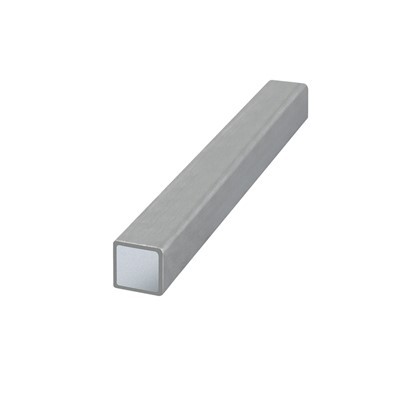
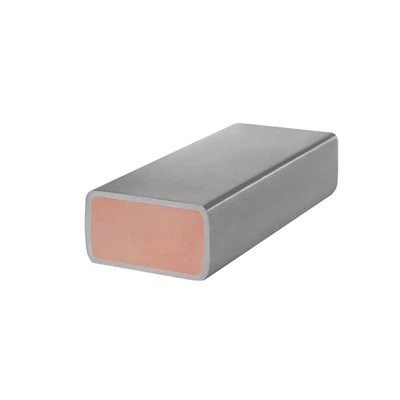
Hey there! As a supplier of Ti/Cu Rods, I often get asked about how these rods react with halogens. It's a super interesting topic, and I'm excited to share some insights with you.
First off, let's talk about what Ti/Cu Rods are. Titanium (Ti) is a strong, lightweight metal known for its excellent corrosion resistance. Copper (Cu), on the other hand, is a great conductor of heat and electricity. When you combine these two metals into a rod, you get a material that has the best of both worlds - the strength and corrosion resistance of titanium and the conductivity of copper.
Now, let's dive into the reaction of Ti/Cu Rods with halogens. Halogens are a group of elements that include fluorine (F), chlorine (Cl), bromine (Br), iodine (I), and astatine (At). These elements are highly reactive and can form compounds with many different metals.
Reaction with Fluorine
Fluorine is the most reactive of the halogens. When Ti/Cu Rods come into contact with fluorine, a very fast and exothermic reaction occurs. Titanium reacts with fluorine to form titanium tetrafluoride (TiF₄), which is a white solid. Copper also reacts with fluorine to form copper(II) fluoride (CuF₂), a light blue solid.
The reaction can be represented by the following equations:
Ti + 2F₂ → TiF₄
Cu + F₂ → CuF₂


This reaction can be quite dangerous because of the high reactivity of fluorine. Special precautions need to be taken when handling fluorine and Ti/Cu Rods to prevent any accidents.
Reaction with Chlorine
Chlorine is also a highly reactive halogen. When Ti/Cu Rods react with chlorine, titanium forms titanium tetrachloride (TiCl₄), a colorless liquid, and copper forms copper(II) chloride (CuCl₂), a brownish-yellow solid.
The chemical reactions are as follows:
Ti + 2Cl₂ → TiCl₄
Cu + Cl₂ → CuCl₂
The reaction with chlorine is less violent than with fluorine but still requires careful handling. Titanium tetrachloride is a volatile compound and can react with moisture in the air to form hydrochloric acid fumes, which are corrosive and can be harmful if inhaled.
Reaction with Bromine
Bromine is a less reactive halogen compared to fluorine and chlorine. When Ti/Cu Rods react with bromine, titanium forms titanium tetrabromide (TiBr₄), a yellow solid, and copper forms copper(II) bromide (CuBr₂), a black solid.
The reactions are:
Ti + 2Br₂ → TiBr₄
Cu + Br₂ → CuBr₂
The reaction with bromine is slower than with chlorine and fluorine. However, bromine is a toxic and corrosive liquid, so proper safety measures should be taken when working with it.
Reaction with Iodine
Iodine is the least reactive of the common halogens. When Ti/Cu Rods react with iodine, titanium forms titanium tetraiodide (TiI₄), a dark brown solid, and copper forms copper(II) iodide (CuI₂), which is unstable and decomposes to form copper(I) iodide (CuI), a white solid.
The reactions are:
Ti + 2I₂ → TiI₄
2Cu + I₂ → 2CuI
The reaction with iodine is relatively slow and less violent compared to the other halogens.
Applications and Considerations
Understanding the reaction of Ti/Cu Rods with halogens is crucial for various applications. For example, in the chemical industry, these reactions can be used to produce different titanium and copper compounds. In the electronics industry, the corrosion resistance of Ti/Cu Rods can be an advantage, but the reactivity with halogens needs to be considered when using them in environments where halogens are present.
If you're interested in our Ti/Cu Rods, we also offer other related products like Copper-clad Steel Bar for ISA Cathode, Titanium-clad Copper Hanger Bar for Titanium Cathode, and Stainless Steel-clad Copper and Steel Bar.
If you're in the market for high-quality Ti/Cu Rods or any of our other products, don't hesitate to reach out for a purchase discussion. We're here to provide you with the best solutions and products for your needs.
References
- Atkins, P. W., & de Paula, J. (2014). Physical Chemistry. Oxford University Press.
- Housecroft, C. E., & Sharpe, A. G. (2012). Inorganic Chemistry. Pearson.